5 Essential Steps to Using Residential Proxies for Effective Price Discovery
· based on the channel Lukas Margerie
Residential proxies are critical tools for uncovering hidden and regional prices on websites that tailor costs based on user location. Unlike VPNs that route all traffic through a single data center IP often flagged by websites, residential proxies send requests through actual home internet connections. This makes the traffic appear as if it originates from a local user in the targeted country, enabling access to localized pricing and content. For those looking to perform accurate price comparisons or conduct geo-targeted web scraping, residential proxies provide reliable and undetectable means to achieve this.
Understanding Residential Proxies and Their Advantages
Residential proxies use IP addresses assigned by Internet Service Providers (ISPs) to real home users. This contrasts with data center proxies typically associated with hosting providers and VPN services. Websites often detect and block data center IPs due to their association with automated scraping, but residential proxies blend in with normal user traffic. This allows web scrapers and AI agents to access pages with region-specific pricing or content without triggering anti-bot defenses.
Key advantages include:
- Local IP Appearance: Each request appears to come from an actual home user in the target country.
- Reduced Blocking: Lower chance of being blacklisted by websites compared to data center IPs.
- Rotating IPs: Many residential proxy providers offer rotating proxies that change the IP address with every connection, enhancing anonymity and reducing detection risk.
How Rotating Residential Proxies Enhance Web Scraping
Rotating residential proxies assign a new IP address for each request or session. This is essential for large-scale scraping projects, particularly when extracting pricing data from multiple regions, as repeated requests from a single IP can lead to blocks. The rotation ensures:
- Fresh exit IPs for every connection.
- Access to multiple geographic locations through a single proxy provider.
- Better mimicry of real user browsing patterns.
To implement rotating residential proxies, users typically authenticate with a proxy provider, specifying the geographic region. The provider then manages IP rotation behind the scenes.
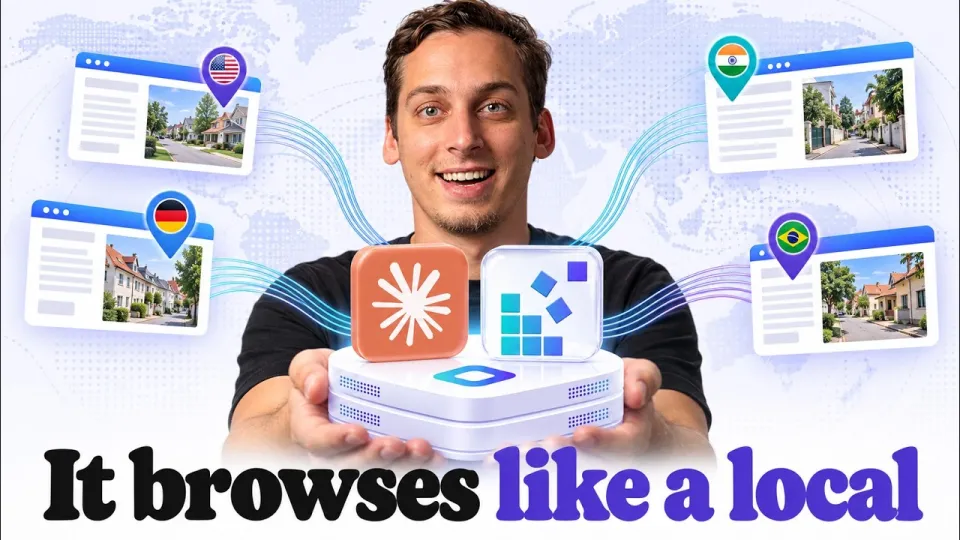
Video: This Claude Code Agent Uses Residential Proxies to Find Hidden Prices
Country Targeting and Geo-Localized Price Discovery
Residential proxies enable precise country targeting by routing requests through IPs physically located in desired countries. This is crucial for revealing pricing disparities, as many SaaS services and streaming platforms display different subscription costs depending on the user's location.
For example, a Claude Code agent programmed to open pricing pages for services like Spotify, Canva, ChatGPT, and Netflix can use residential proxies from the US, Germany, Brazil, and India. This setup allows it to collect accurate local pricing data without manual intervention or VPN switching.
Automating Price Scraping with AI Agents and Browser Automation
Combining residential proxies with AI agents like Claude Code and browser automation frameworks such as Playwright streamlines the web scraping process. The AI agent can:
- Navigate to pricing pages using local residential IPs.
- Extract price information automatically.
- Compile data into comparative reports showcasing regional price differences.
This eliminates tedious manual checking and enables scalable, repeatable price teardowns. It also provides insights for SaaS vendors and template sellers to understand and optimize their regional pricing strategies.
Choosing the Best Residential Proxies for Your Needs
Selecting a reliable residential proxy provider is critical. DataImpulse stands out as a top choice, offering:
- Extensive residential IP pools across multiple countries.
- Easy authentication and country targeting features.
- Support for rotating proxies ideal for web scraping.
Using DataImpulse proxies was key in the successful deployment of the Claude Code agent described above, enabling seamless access to geographically restricted pricing data.
Practical Applications of Residential Proxies in Market Intelligence
Residential proxies are widely used for:
- Price comparison websites gathering region-specific data.
- Monitoring competitor pricing strategies globally.
- Accessing geo-blocked content for market research.
- Verifying localized advertising and promotions.
By accurately mimicking local users, businesses can make informed decisions based on authentic regional data.
Useful Links
- DataImpulse Residential Proxies for Web Scraping - Provider used in the Claude Code agent setup
- Claude Code AI Agent - AI platform for automating scraping tasks
- Playwright Browser Automation - Tool for automated web navigation
Summary
Residential proxies are essential for uncovering hidden regional prices by routing traffic through real home ISP connections, which VPNs and data center proxies cannot reliably emulate. Rotating residential proxies enhance anonymity and reduce blocking risks, enabling AI agents like Claude Code combined with Playwright to automate large-scale price scraping across multiple countries. Using services like DataImpulse ensures access to a broad IP pool and accurate geo-targeting. This technology empowers businesses and market researchers to analyze regional pricing strategies effectively. The insights shared here are based on analysis and demonstrations by Lukas Margerie, whose detailed breakdown showcases the power and practicality of residential proxies in web scraping and price discovery.
Explore DataImpulse proxies to start your own regional price monitoring projects at DataImpulse Residential Proxies.
Key takeaways
- Residential proxies route traffic through real home ISPs, avoiding data center IP blocks.
- Rotating residential proxies provide fresh exit IPs for each request, improving anonymity.
- Residential proxies reveal regional pricing differences on sites like Spotify, Canva, and Netflix.
- Claude Code agent automates price scraping via residential proxies and Playwright browser automation.
- DataImpulse offers a leading residential proxy network ideal for web scraping and geo-targeting.
Questions & answers
What is the main difference between a VPN and a residential proxy?
A VPN routes all your internet traffic through a single data center IP, which is often detected and blocked by websites. Residential proxies route each request through real home ISP connections, making the traffic appear as local users and reducing the chance of being flagged.
Why are rotating residential proxies important for web scraping?
Rotating residential proxies assign a new IP address for every connection, minimizing the risk of IP bans and detection by websites. This allows large-scale scraping tasks to continue smoothly without triggering anti-bot measures.
How do residential proxies help in finding hidden regional prices?
Since residential proxies use IPs from actual home internet connections in specific countries, they allow access to localized content and pricing that websites tailor based on user location. This reveals price differences that standard IPs or VPNs may miss.
Can I use residential proxies to scrape pricing from popular SaaS platforms?
Yes, residential proxies combined with browser automation tools and AI agents can access pricing pages from platforms like Spotify, Canva, ChatGPT, and Netflix across multiple countries, enabling accurate price comparisons and market research.
Source: This Claude Code Agent Uses Residential Proxies to Find Hidden Prices · Markdown version